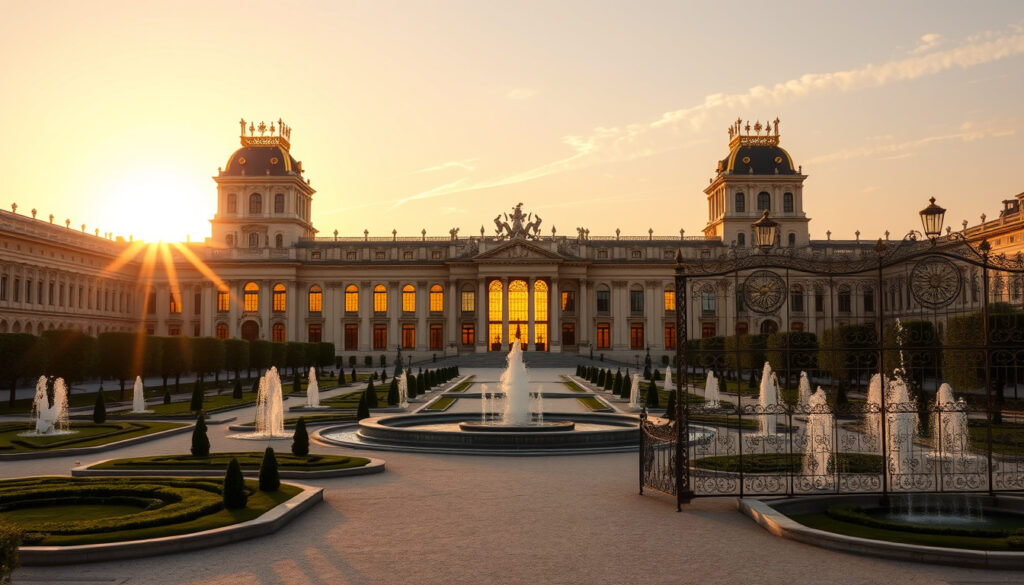
Louis XIV: The Sun King’s Reign, Legacy, and Controversies
Few rulers have stamped their identity on a nation quite like Louis XIV. Over 72 years, he turned France into Europe’s dominant power and built the Palace of Versailles, a symbol of absolute monarchy that still draws millions of visitors yearly.
Born: 5 September 1638 ·
Reign: 14 May 1643 – 1 September 1715 ·
Length of reign: 72 years and 110 days ·
Nickname: Sun King ·
Palace: Palace of Versailles
Quick snapshot
- Reigned 72 years, the longest of any major European monarch (Wikipedia (open encyclopedia))
- Moved the court to Versailles in 1682 (Château de Versailles)
- Died on 1 September 1715 in Versailles (Britannica (encyclopedic reference))
- The identity of “La Mauresse” as his daughter remains unproven (Britannica (encyclopedic reference))
- The exact number of illegitimate children varies by historical source (Britannica (encyclopedic reference))
- The authenticity of his deathbed phrase “L’État, c’est moi” is disputed (Britannica (encyclopedic reference))
- 1638: Born at Saint-Germain-en-Laye (Britannica (encyclopedic reference))
- 1643: Ascends throne at age 4 (Château de Versailles)
- 1715: Dies after final illness (Britannica (encyclopedic reference))
- The Spanish Bourbon line carries his bloodline forward (Wikipedia (open encyclopedia))
- Versailles remains a UNESCO World Heritage site and major tourist destination (Château de Versailles)
Seven key facts about the Sun King, one pattern: his reign was defined by centralization — of power, of culture, and of the state itself.
| Attribute | Value |
|---|---|
| Full name | Louis Dieudonné de Bourbon |
| Born | 5 September 1638, Saint-Germain-en-Laye |
| Died | 1 September 1715, Versailles |
| Reign | 1643–1715 |
| Spouse | Maria Theresa of Spain |
| Nickname | Sun King (le Roi Soleil) |
| Major palace | Versailles |
Louis XIV built a system so centered on himself that after his death, the machinery of absolute monarchy outlasted his own dynasty by only 74 years — the Revolution of 1789 proved that a state built around one man is as fragile as the man himself.
Why is Louis XIV so famous?
Louis XIV transformed France into the dominant European power through a combination of military ambition, political centralization, and cultural patronage. His reign, which lasted 72 years and 110 days as documented by Wikipedia (open encyclopedia), is the longest of any major European monarch. He built the Palace of Versailles as a symbol of absolute monarchy, compelling nobles to reside there to weaken their independent political influence, according to the Château de Versailles (official museum site).
Why was Louis XIV called the Sun King?
- He performed as the sun in the Ballet de la Nuit at age 15, casting the king as the source of light that makes all growth possible (Château de Versailles)
- The sun symbolized Apollo, the god of arts — aligning Louis with divine creative power
- His propagandists used the sun as a metaphor for his centrality to the French state: everything revolved around him
The implication: the Sun King persona was not vanity — it was a deliberate political branding campaign that fused monarchy, mythology, and national identity into a single, unassailable image. That image persists today in every depiction of Versailles and every textbook on absolute monarchy.
For modern readers trying to understand French national identity, the Sun King remains the template. Every French president since de Gaulle has consciously borrowed elements of the Louis XIV playbook: centralized power, grand cultural projects, and a foreign policy that insists on French exceptionalism.
The implication: the Sun King’s branding fused monarchy, mythology, and national identity into an unassailable image that still defines French identity today.
How many illegitimate children did Louis XIV have?
Louis XIV had at least seven illegitimate children with two principal mistresses: Louise de La Vallière and Françoise-Athénaïs de Montespan. According to Britannica (encyclopedic reference), he legitimized many of them, giving them titles, lands, and — in some cases — positions near the throne.
- With Louise de La Vallière: four children, two of whom survived infancy (Marie-Anne and Louis)
- With Madame de Montespan: seven children, six of whom survived (including Louis-Auguste, Duke of Maine; Françoise-Marie; and Louise-Françoise)
- Several became dukes or married into royal families — the Duke of Maine commanded the king’s armies
The pattern: Louis treated his illegitimate children with remarkable openness for a 17th-century monarch. He legitimized them in the eyes of the church and state, and several wielded real political power — a decision that would cause conflicts after his death, when the Duke of Maine and his half-uncle, the Duke of Orléans, fought for control of the regency.
The exact number of Louis XIV’s illegitimate children remains a moving target. Different historians count differently, depending on whether stillbirths, infancy deaths, and rumored but unacknowledged children are included. At minimum: seven. The true number could be higher.
The pattern: Louis treated his illegitimate children with unusual openness, but the uncertainty over the exact count underscores the limits of historical record-keeping.
What did Louis XIV say on his deathbed?
His reported last words, spoken on 1 September 1715 at Versailles after a prolonged illness: “I depart, but the State shall remain” (or, in another version, “I am going, but the State will always remain”). He also reportedly said “I have loved war too much.”
“I depart, but the State shall remain.”
— Louis XIV, attributed deathbed words, 1715
What this means: even at the end, Louis was performing kingship. His deathbed was a stage, and the script emphasized what he wanted remembered — the State as eternal, his personal faults acknowledged but framed as virtues misapplied. The phrase “I have loved war too much” is not a confession of error so much as a self-aware epitaph.
The famous phrase “L’État, c’est moi” — “I am the State” — is almost certainly apocryphal. According to Britannica (encyclopedic reference), it was likely invented later to capture the spirit of his absolutism rather than a verbatim quote. But even a legend can express a truth: for 72 years, the French state was indistinguishable from Louis Bourbon.
Are there any descendants of Louis XIV?
Louis XIV’s direct male line ended in 1883 with the death of the Comte de Chambord, grandson of King Charles X, as documented by Wikipedia (open encyclopedia). However, descendants through female lines are very much alive today.
- The current King of Spain, Felipe VI, descends from Louis XIV through his Bourbon line (Philip V was Louis XIV’s grandson)
- The House of Bourbon-Parma (including the Grand Duke of Luxembourg) traces back to Louis XIV
- Many European aristocrats and royals — including the Belgian and Italian pretenders — carry his blood
The trade-off: the Sun King’s dynastic strategy succeeded brilliantly at spreading his bloodline across Europe’s thrones, but the direct French male line — the heart of his absolutist project — died out just 168 years after he did. Today, no reigning French monarch carries his DNA; the kings of Spain do.
Who was Louis XIV’s black daughter?
There is a historical figure known as “La Mauresse” or “Louise Marie-Thérèse” — a Black nun who some claim was Louis XIV’s illegitimate daughter. According to Britannica (encyclopedic reference), the story is disputed and most historians consider it a legend. No definitive proof exists that Louis XIV fathered a child of African descent.
The claim appears to originate from oral traditions around a woman named Louise Marie-Thérèse (also called “the Moorish nun”) who lived at the Convent of the Visitation in Meaux. Supporters of the theory suggest her mother was either an African slave or servant at court. Skeptics point to the absence of any documentary evidence from the king’s household records, which meticulously tracked his acknowledged children and mistresses.
What remains unclear: the identity of “La Mauresse” is one of those historical puzzles that resist resolution because the records either never existed or were destroyed. The legend persists in French folklore, particularly in Martinique, where some families claim descent from Louis XIV through this daughter. But the consensus among academic historians is clear: without a birth record, baptismal register, or any correspondence mentioning such a child, the story belongs to the realm of speculation.
Timeline: Key dates in Louis XIV’s life
- 1638: Birth of Louis XIV at Saint-Germain-en-Laye (Britannica (encyclopedic reference))
- 1643: Ascends throne after death of Louis XIII; Anne of Austria serves as regent (Château de Versailles)
- 1661: Death of Cardinal Mazarin; Louis begins personal rule
- 1682: Move of court to Versailles; official inauguration on 6 May (Château de Versailles)
- 1685: Revocation of Edict of Nantes, ending religious tolerance for Protestants
- 1701–1714: War of the Spanish Succession drains French treasury
- 1715: Death of Louis XIV at Versailles
What this timeline shows: Louis XIV’s reign was a long arc of consolidation, war, and cultural achievement that ended with a weakened France and an uncertain future.
myprivateparis.com, study.com, paristoversailles.com, crrs.library.utoronto.ca, youtube.com, youtube.com, afberkeley.org, julesharper.com
Frequently asked questions
How old was Louis XIV when he became king?
He was four years old. Louis became king in 1643 upon the death of his father, Louis XIII. His mother, Anne of Austria, served as regent with Cardinal Mazarin as chief minister until 1661 (Château de Versailles).
What was the Fronde?
The Fronde (1648–1653) was a series of civil wars and uprisings in France, led by nobles and parlements who opposed the centralizing policies of the crown. The young Louis XIV was forced to flee Paris twice. The experience shaped his determination to never again let the nobility challenge royal authority (Britannica (encyclopedic reference)).
Did Louis XIV really say “I am the state”?
The phrase “L’État, c’est moi” is almost certainly apocryphal. It was attributed to him later as a symbolic encapsulation of his absolutist rule, not a verbatim quote. No contemporary source records him saying it (Britannica (encyclopedic reference)).
How many wives did Louis XIV have?
He had one official wife: Maria Theresa of Spain, whom he married in 1660 as part of the Treaty of the Pyrenees. She died in 1683. Louis did not remarry, but he maintained several long-term mistresses who wielded significant political influence, especially Françoise-Athénaïs de Montespan and later Françoise d’Aubigné, Madame de Maintenon (whom he may have married secretly).
What happened to Louis XIV’s heart?
Louis XIV’s heart was removed during the traditional embalming process and placed in a lead casket. It was originally kept at the Church of Sainte-Marie des Anges in Paris, but was moved during the French Revolution. The final resting place of his heart is uncertain; some sources claim it was stolen and lost during the revolutionary period.
Why did Louis XIV revoke the Edict of Nantes?
In 1685, Louis XIV revoked the Edict of Nantes, which had granted religious tolerance to French Protestants (Huguenots) since 1598. He believed a unified Catholic France was essential for political stability and saw Protestantism as a challenge to absolute authority. The revocation forced hundreds of thousands of Huguenots to flee France, taking their skills and capital to England, Prussia, and the Netherlands — a brain drain that weakened the French economy (Château de Versailles).
What was the Palace of Versailles originally?
The site was originally a small hunting lodge built by Louis XIII in the 1620s. Louis XIV transformed it over several decades into the grand palace we know today, moving the French court there in 1682. The expansion was a deliberate political act: by housing the nobility under one roof, the king could monitor them, reward loyalty, and prevent any regional strongholds from emerging (Château de Versailles (official history)).
More related posts
 When Is Thanksgiving in Canada? 2025-2027 Dates & Differences
 How to Change Default Apps Windows – 10 & 11 Step-by-Step Guide
 Cast of Crocodile Dundee: Paul Hogan, Linda Kozlowski, and More
 Saint Joseph: What He Is Known For, Patronage, and Feast Days
 How Old Is Google in 2025? 27 Years Since 1998 Founding
 Game of Thrones Map – Full Westeros and Essos Interactive Guide
 What Is a Monsoon? Definition, Causes and Regions Explained
