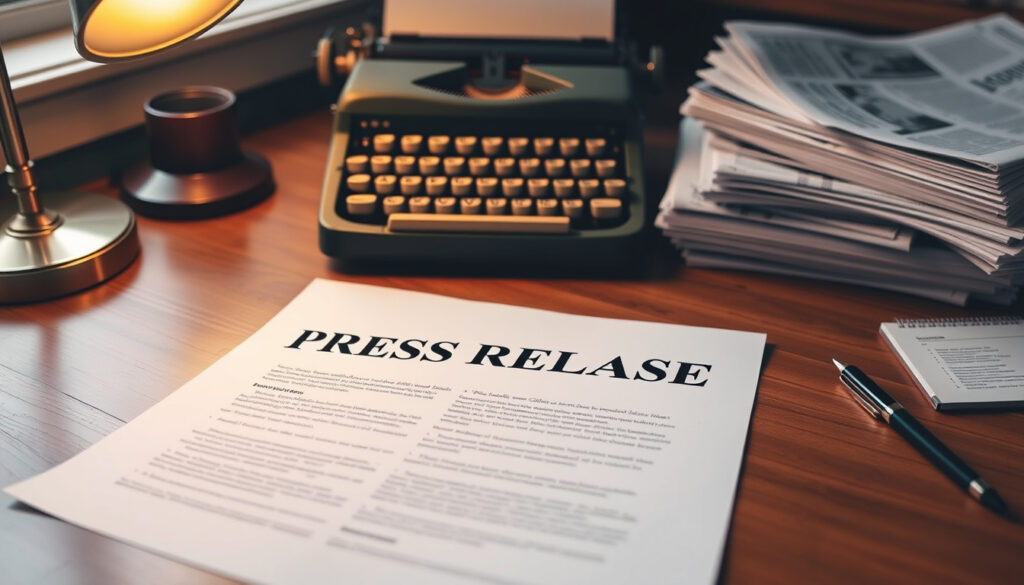
How to Write a Press Release – Step-by-Step Guide and Examples
A press release serves as a direct line of communication between an organization and the media. When crafted correctly, it can secure coverage across publications, broadcast outlets, and digital platforms. Understanding the mechanics of effective press release writing remains essential for public relations professionals, marketers, and business leaders alike.
The standard format has remained largely consistent for decades, yet 2025 brings new expectations around multimedia integration and concise pitching. Mastering these fundamentals positions communicators to cut through noise and capture journalist attention in an increasingly crowded news environment.
What Is a Press Release and What Should It Include?
A press release constitutes an official statement issued to news media and other targeted outlets. Its primary function involves announcing something newsworthy—product launches, corporate milestones, events, partnerships, or executive appointments. The format follows a standardized structure that journalists recognize and expect, which streamlines their evaluation process.
The essential components include the FOR IMMEDIATE RELEASE header, headline, optional subheadline, dateline, lead paragraph, body paragraphs, boilerplate, media contact information, and the closing triple hash mark (###). Each element serves a specific purpose in conveying information efficiently to busy reporters scanning dozens of submissions daily.
An official organizational announcement distributed to media outlets for potential coverage.
Communicate newsworthy information directly to journalists and publications.
One single-spaced page, typically 400-600 words maximum.
Header, headline, dateline, lead, body, boilerplate, contacts, end marker.
Key Insights for Effective Press Releases
- Lead with the strongest fact—journalists decide within seconds whether to continue reading.
- Answer all five Ws (who, what, when, where, why) within the opening paragraph.
- Include one to two attributable quotes from company executives or partners.
- Use active voice and concrete nouns while avoiding promotional adjectives.
- Quantify achievements whenever possible—numbers command attention.
- Prepare multimedia assets including images, logos, and infographics for distribution.
- Proofread meticulously using AP Style guidelines before sending.
Press Release Element Reference
| Element | Purpose | Best Practice | Length |
|---|---|---|---|
| Header | Indicates release status | Use FOR IMMEDIATE RELEASE or EMBARGOED UNTIL [date] | 1 line |
| Headline | Summarizes core news | Title case, under 10 words, informative | 5-10 words |
| Subheadline | Adds context | Optional, 15-25 words maximum | 1 sentence |
| Dateline | Identifies location and date | CITY, STATE—Date format | 1 line |
| Lead Paragraph | Covers 5 Ws + significance | 25-40 words, strongest fact first | 25-40 words |
| Body | Provides supporting details | Inverted pyramid structure, short paragraphs | 200-400 words |
| Boilerplate | Organizational background | 50-100 words, standard company bio | 50-100 words |
| Media Contact | Enables follow-up | Name, title, email, phone, timezone | 3-5 lines |
Standard Press Release Format
The standard press release format follows an inverted pyramid structure, placing the most critical information at the top. This approach accommodates journalists who often read only the opening paragraphs before deciding whether to pursue a story. PRSA guidelines emphasize that consistency in format builds credibility and facilitates faster processing by media professionals.
Header and Release Status
The header appears at the very top of the document. FOR IMMEDIATE RELEASE signals that the organization permits immediate publication. Alternatively, EMBARGOED UNTIL [specific date and time] notifies journalists that the information should not be published before that point. Some organizations use this approach to coordinate simultaneous coverage across multiple outlets.
Headline and Subheadline Conventions
The headline must capture attention while remaining informative. AP Style conventions recommend title case for headlines, with most major words capitalized. Effective headlines typically run under 10 words and state the core announcement directly. A subheadline, when included, provides one additional sentence of context spanning 15-25 words.
Strong headlines follow the pattern “[Organization] [Action/Announcement] to [Benefit/Outcome]”—for example, “SRH Haarlem Campus Launches Master’s in Applied Sustainability Management.” Avoid vague adjectives like “revolutionary” or “amazing.”
Dateline Placement and Format
The dateline identifies the release location and date, formatted as “CITY, STATE/COUNTRY — Date.” It appears immediately before or as part of the opening sentence. Standard practice abbreviates U.S. state names when they follow cities (e.g., “NEW YORK, NY” but “Boston, MA”). International locations typically use country names without abbreviations.
How to Write Key Press Release Elements Step-by-Step
Writing a press release involves seven distinct phases, each building toward a polished final document. AP Stylebook standards govern most professional press releases, emphasizing clarity, accuracy, and brevity. Following these steps systematically produces more consistent results.
Step 1: Identify the Newsworthy Angle
Before writing begins, confirm that the announcement genuinely qualifies as news. Product launches, major events, significant partnerships, research findings, and leadership changes typically merit press releases. Routine updates or content better suited for marketing emails should bypass this format entirely.
Step 2: Craft the Headline
Draft a headline that states the announcement clearly. Include the organization name and the core action or development. Test whether someone unfamiliar with your company would understand the basic news from the headline alone. Revise until the message remains clear without additional context.
Step 3: Write the Lead Paragraph
The opening paragraph must answer who, what, when, where, why, and how within 25-40 words. Place the most compelling information first. If announcing a partnership worth $2 million, that figure belongs in the lead. If launching a product on September 1st, that date anchors the opening.
Quantify achievements whenever possible. “10,000 customers” reads more compellingly than “thousands of customers.” Specific numbers help journalists visualize the story scope immediately.
Step 4: Build the Body
Expand on the lead with two to four supporting paragraphs. Include relevant background, evidence, and context. Incorporate one or two quotes from executives, partners, or industry experts. Each quote should add perspective that the facts alone cannot convey. Use bold formatting sparingly to highlight key statistics or milestones.
Step 5: Add Boilerplate and Contact Information
The boilerplate provides a standardized company description spanning 50-100 words. It explains who the organization is, what it does, and its market position. Contact information must include a real person’s name, title, email address, phone number with time zone, and a URL to the press page.
Step 6: Proofread Using AP Style
Review the entire document for grammar, spelling, and style consistency. Verify that numbers follow AP conventions—spell out one through nine, use numerals for 10 and above. Check that state abbreviations appear correctly after cities. Confirm all facts, quotes, and statistics match source materials exactly.
Step 7: Prepare Supporting Assets
Gather high-resolution images, company logos, infographics, and relevant video clips. Create both a short version (50-60 words) and a long version (100-120 words) of the announcement for different distribution channels. Package these assets together for journalists who need ready-to-use materials.
Press Release Examples and Templates
Reviewing concrete examples clarifies how the various elements combine into a cohesive document. The following template demonstrates standard product launch formatting, illustrating proper placement and proportion of each component.
Adapt this structure for events by leading with exclusive access or speaker announcements. For partnership announcements, emphasize mutual benefits and shared goals in the opening paragraph.
FOR IMMEDIATE RELEASE
[Organization Name] Announces [Product/Service]
[City, State] — [Date] — [Organization] today announced [announcement], developed with [partners], [key feature], with [launch date or availability].
[Body paragraph detailing features, benefits, partnerships, and evidence.]
[Quote from executive or partner with attribution.]
[Second supporting paragraph with additional context.]
About [Organization]
[50-100 word boilerplate describing company history, mission, and market position.]
Media Contact:
[Name] Per a més detalls sobre com redactar un comunicat de premsa, consulta la ${biografia de Martin Luther King Jr}. biografia de Martin Luther King Jr
[Title]
[Email]
[Phone with time zone]
[Press page URL]
###
Event Announcement Variations
Event-focused releases emphasize different elements. The headline typically names the event and its significance. The lead highlights exclusive elements or notable speakers. Body paragraphs cover logistics, expected attendance, and how journalists can obtain credentials or access.
For guidance on distributing your completed release effectively, explore related resources on AI-powered productivity tools that can streamline your PR workflow.
Common Press Release Mistakes to Avoid
Even experienced communicators encounter pitfalls that undermine otherwise solid announcements. Understanding these common errors helps writers recognize and correct issues before distribution.
Overusing Promotional Language
Adjectives like “revolutionary,” “groundbreaking,” or “amazing” signal marketing speak rather than journalistic content. PR Newswire guidance recommends maintaining an objective, factual tone throughout. Let the facts speak for themselves—reporters decide what significance your announcement carries.
Avoid phrases like “is proud to announce” or “is excited to reveal.” These constructions add no information and suggest the organization doubts the announcement’s inherent news value.
Missing Essential Information
Press releases without datelines, incomplete contact information, or missing boilerplates frustrate journalists. Each element exists for a reason. A release without contact details leaves journalists unable to verify information or schedule follow-up interviews.
Exceeding Recommended Length
One single-spaced page remains the standard maximum. Extended releases get trimmed—often by deleting quotes and supporting paragraphs that provide the most human perspective. Discipline yourself to convey the full message within this constraint. Information density matters more than comprehensive coverage.
Ignoring AP Style Guidelines
Inconsistencies in capitalization, number formatting, and abbreviation signal amateurism. A press release that reads professionally passes initial editorial screening more readily. Consider bookmarking Purdue University’s journalism writing resources for quick reference.
Poor Distribution Timing
Sending releases during major news cycles buries your announcement. Mid-week mornings typically perform best for general releases. Product launches may warrant coordinated timing with embargoed exclusives pitched to targeted journalists days in advance.
The Press Release Writing Process
Effective press release development follows a predictable sequence. Understanding this workflow helps organizations allocate time appropriately and ensure nothing gets overlooked.
- Discovery Phase (30 minutes): Identify the newsworthy angle and confirm it merits a formal release.
- Outline Draft (20 minutes): Structure key points, quotes, and supporting data before writing begins.
- First Draft (45-60 minutes): Write headline, lead, body, and boilerplate following the standard format.
- Review Pass (20 minutes): Check facts, verify quotes, and ensure all required elements appear.
- AP Style Edit (15 minutes): Correct formatting, numbers, and capitalization per style guidelines.
- Asset Preparation (15-30 minutes): Compile images, logos, and multimedia materials.
- Final Approval (15 minutes): Obtain necessary sign-offs from spokespeople and legal review if applicable.
- Distribution (variable): Upload to wire services, send targeted pitches, and publish on owned channels.
What Remains Consistent Versus Evolving
The fundamental structure of press releases has remained stable for decades. The inverted pyramid format, standard elements, and AP Style conventions continue guiding professional practice. These established principles provide reliability that communicators can depend upon.
Emerging practices include greater emphasis on multimedia assets and shorter, more targeted pitches. Journalists receive hundreds of releases daily—those with embedded visuals and concise hooks above the fold attract more attention. Email personalization and strategic timing have gained importance as reporters manage increasing workloads.
While delivery channels have evolved from fax to email to wire services, the core document format has changed little. Mastering these fundamentals prepares communicators for any medium.
Industry Standards and Professional Sources
Several organizations provide authoritative guidance on press release standards. The Public Relations Society of America (PRSA) publishes ethical guidelines and best practices adopted by professionals worldwide. The Associated Press Stylebook offers definitive rules on writing conventions, capitalization, and number formatting.
“The goal of any press release is to earn media coverage by providing journalists with exactly what they need: accurate information presented in a familiar, scannable format.”
— PRSA Professional Standards Advisory
Wire services including Business Wire and PR Newswire publish distribution guides and research on engagement metrics. Their platforms offer templates and formatting tools aligned with industry expectations.
Summary
Writing an effective press release requires understanding both timeless principles and contemporary expectations. The standard format—header, headline, dateline, lead, body, boilerplate, contacts, and end marker—provides a reliable framework. Success depends on leading with the strongest information, maintaining an objective tone, including attributable quotes, and respecting length constraints.
For teams seeking to enhance their documentation workflows, consider exploring available note-taking solutions that support collaborative content development. Consistent practice and attention to detail distinguish professional press releases from amateur attempts.
Frequently Asked Questions
Where do you send a press release?
Distribute through newswire services for broad reach, direct email to targeted journalists covering your industry, and post on your organization’s press or newsroom page. Segment your distribution list based on relevance to specific announcements.
What is a press release dateline?
The dateline indicates the release’s origin location and date, formatted as “CITY, STATE/COUNTRY — Date.” It appears immediately before or as part of the opening sentence and helps journalists understand the context and timing of the announcement.
Can press releases be longer than one page?
While one page remains the standard maximum, longer releases occasionally serve complex announcements. However, releases exceeding one page risk having supporting information deleted by journalists. Consolidate essential points within the page limit whenever possible.
What makes a press release newsworthy?
Newsworthy announcements typically involve significant developments such as product launches, mergers, research findings, major events, leadership changes, or substantial partnerships. Routine updates generally lack sufficient news value for formal press releases.
How do you format quotes in a press release?
Format quotes with quotation marks, attribution to a named individual including their title and organization, and italicized paragraph styling when possible. Each quote should add perspective beyond what the facts alone convey.
What is the difference between FOR IMMEDIATE RELEASE and EMBARGOED?
FOR IMMEDIATE RELEASE permits immediate publication upon receipt. EMBARGOED UNTIL [date/time] requests that journalists refrain from publishing until the specified moment, enabling coordinated coverage across multiple outlets.
How should numbers be formatted in press releases?
Follow AP Style: spell out one through nine, use numerals for 10 and above. Exceptions include ages, percentages, and measurements when used with symbols. Always include context—write “$5 million” rather than simply “5 million.”
More related posts
 RBC Banque en Direct Sign In: Login & App Guide
 Shraddha Kapoor Biography: Age, Movies, Net Worth
 Best Time to Visit Japan – Ultimate 2025 Guide
 Maison à Vendre Blainville: 2025 House Prices & Guide
 Pâte à Pizza Maison: Tips for Perfect Homemade Pizza Dough
 AT&T Stock: Buy, Sell, or Hold? 2025 Forecast & Analysis
 Reid Hamer-Jackson – Verified Facts from BC Court Searches
 Court State vs a Nobody: Hit or Flop? Worth Watching
