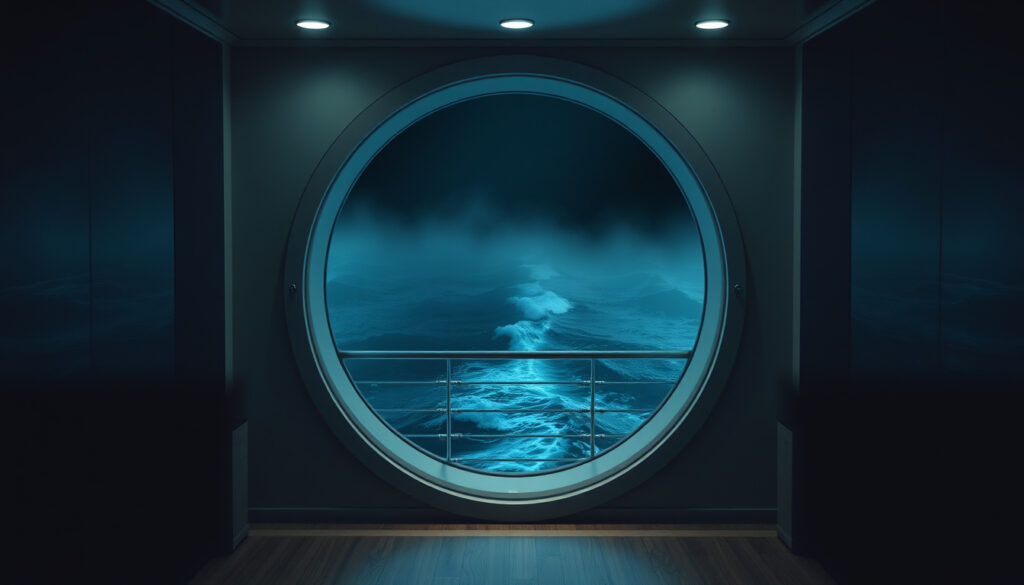
The Woman in Cabin 10 – Plot Summary, Ending and Reviews
Ruth Ware’s The Woman in Cabin 10 immerses readers in a world of luxury yachts, psychological tension, and suspected murder. Published in 2016, the novel follows travel journalist Lo Blacklock as she investigates a horrifying crime aboard an exclusive vessel sailing from England to Norway. What begins as a dream assignment quickly descends into a nightmare of doubt, isolation, and betrayal.
The book became an immediate bestseller and established Ware as a leading voice in contemporary psychological thrillers. Its locked-room mystery setup and unreliable narrator technique draw frequent comparisons to classic detective fiction while offering a distinctly modern take on suspense.
What is The Woman in Cabin 10 about?
Lo Blacklock, a travel journalist still recovering from a traumatic burglary, lands a prestigious assignment: covering the maiden voyage of the luxury yacht Aurora. Hosted by billionaire Richard Bullmer and his terminally ill wife Anne, the guest list includes elite passengers and business associates.
On the first night, Lo borrows mascara from a pale, blonde woman in the neighboring Cabin 10. Hours later, during a violent storm, she witnesses blood on a balcony and a body being thrown overboard. When she raises the alarm, the crew insists every passenger is accounted for. What follows is a claustrophobic descent into doubt and paranoia.
Lo’s credibility is systematically undermined by her PTSD, panic attacks, and medication—creating a central tension between what she knows to be true and what others can prove.
Quick Overview
Ruth Ware
2016
Psychological Thriller
Luxury Cruise Ship
Key Insights
- The woman in Cabin 10 is later revealed as Carrie, Richard Bullmer’s mistress and a lookalike for his wife Anne
- The isolated yacht setting eliminates any possibility of escape, amplifying psychological pressure
- Gaslighting operates on multiple levels—characters doubt Lo while readers may initially share that skepticism
- The storm serves as both literal chaos and metaphor for Lo’s fractured mental state
- Evidence disappears: the mascara Lo borrowed vanishes, further undermining her claims
- AI facial recognition technology plays a role in the conspiracy, hinting at contemporary anxieties
- The ending leaves certain loose threads, particularly regarding Carrie’s ultimate fate
Snapshot Facts
| Fact | Details |
|---|---|
| Protagonist | Lo Blacklock |
| Publisher | Gallery Books |
| Page Count | 352 pages |
| Average Rating | 3.7/5 on Goodreads |
| Vessel Name | The Aurora |
| Setting | North Sea, England to Norway |
| Voyage Duration | One week |
| Subgenre | Locked-room mystery |
Who wrote The Woman in Cabin 10 and what’s the background?
Ruth Ware is a British author who has built her reputation on twisty psychological thrillers set within isolated environments. Her debut novel, In a Dark, Dark Wood (2015), garnered significant acclaim and established her approach to suspense storytelling.
Ware draws from her own background as a journalist, bringing authenticity to her protagonist’s observational instincts and professional curiosity. Her influences include classic mystery writers, particularly Agatha Christie, whose locked-room setups and ensemble casts of suspects she reimagines for contemporary audiences.
Her unreliable narrator technique creates deliberate ambiguity, keeping readers uncertain about what is real versus what might be a product of Lo’s traumatized mind. This approach has become a hallmark of her work, earning both praise for its psychological depth and critique for occasionally frustrating reader expectations.
The Novel’s Success
The Woman in Cabin 10 became a bestseller following its release, significantly boosting Ware’s profile in the thriller genre. The book has been translated into multiple languages and maintains strong reader engagement through platforms like Goodreads where thousands of ratings and reviews continue to generate discussion.
Is The Woman in Cabin 10 based on a true story?
No. The Woman in Cabin 10 is a work of fiction and is not based on a true story. Ruth Ware crafted the narrative as a complete work of imagination, drawing inspiration from the psychological thriller and locked-room mystery traditions rather than any real events.
The novel belongs to the genres of psychological suspense and locked-room mystery. These categories emphasize mental manipulation, unreliable perception, and confined settings where crimes occur under seemingly impossible circumstances—all elements that work effectively in fiction without requiring real-world foundations.
While real cruise incidents exist, Ware’s yacht thriller operates independently of those events. The story’s confined setting and claustrophobic tension stem from genre conventions and creative storytelling rather than documented cases.
What is the ending of The Woman in Cabin 10?
Major spoilers follow.
Lo’s observation proves accurate: a murder does occur. The truth unfolds gradually as Lo pieces together the conspiracy. Richard Bullmer discovers his wife Anne’s affair and a violent confrontation ensues, resulting in Richard accidentally killing Anne. He throws her body overboard.
To cover his crime, Richard enlists his mistress Carrie, who bears a striking resemblance to Anne, to impersonate her. With makeup to mimic chemotherapy effects from Anne’s stated illness, Carrie takes Anne’s place at public events. The pair use AI facial recognition technology—provided by a complicit board member—to convince others that Anne remains alive and well.
Carrie eventually traps Lo below deck to protect the conspiracy. However, guilt drives Carrie to reveal the full truth and assist Lo’s escape. Lo swims ashore while disguised as Anne and is rescued. In the aftermath, Richard dies—Carrie shoots him, staged as a suicide. Anne’s body is recovered, initially misidentified as Lo’s due to planted clothing. Carrie transfers money to Lo anonymously before disappearing.
The ending leaves certain questions unanswered, particularly regarding Carrie’s ultimate fate and whether justice truly prevails. Some readers have noted these loose threads as a limitation, while others interpret them as a realistic depiction of how such crimes might conclude.
The Netflix Adaptation Differs Significantly
The upcoming Netflix film adaptation, starring Keira Knightley as Lo and Guy Pearce as Richard, makes substantial changes to the plot. In this version, Carrie replaces Anne through AI technology alone, a character named Mehti becomes involved, Ben dies heroically, and Lo directly participates in killing Richard during a gala sequence. Those familiar with the novel should approach the film as a separate interpretation rather than a faithful retelling.
What genre is The Woman in Cabin 10 and does it have adaptations?
Genre Classification
The Woman in Cabin 10 falls primarily within psychological thriller and locked-room mystery genres. The novel combines suspense elements with psychological depth, exploring themes of gaslighting, trauma response, and the reliability of perception under extreme stress.
Current Adaptations
As of the search results available, no faithful film adaptation exists. A Netflix movie announced for 2026 features notable casting changes and plot divergences that substantially alter the source material’s conclusion.
Audiobook Availability
An audiobook version is available and has received positive attention for its narration quality. The immersive delivery enhances the novel’s suspenseful atmosphere, with voice performance effectively conveying Lo’s deteriorating mental state and the mounting tension aboard the yacht.
Similar Books Worth Exploring
Readers who enjoyed The Woman in Cabin 10 might consider exploring related works:
- Ruth Ware’s other novels, including The Lying Game and The It Girl, which share similar psychological thriller elements and twisty narratives
- Agatha Christie’s And Then There Were None, a classic locked-room mystery featuring isolated group dynamics
- Lucy Foley’s The Guest List, another contemporary thriller set within a confined location where crime occurs
These recommendations share thematic elements with Ware’s work but represent distinct narratives with their own twists and resolutions.
Timeline of Events
The narrative unfolds over approximately one week aboard the Aurora as it travels from England toward Norway:
- Day 1: Lo boards the yacht, meets Carrie in Cabin 10, and witnesses blood and a body being thrown overboard during a storm
- Days 2-4: Lo investigates while facing systematic denial from crew and passengers; she discovers a photograph that raises further questions
- Mid-voyage: Carrie lures Lo below deck where she is imprisoned
- Climax: Near Norway, during a gala stop at port, Lo escapes and confrontations erupt
- Resolution: Lo reaches shore, events are later reported through news sources, and the aftermath unfolds
The pacing accelerates significantly after the initial incident, with events compounding rapidly as Lo’s investigation deepens.
What readers say – Reviews and Reception
Critical reception has been mixed but generally positive. Reviewers praise the novel’s claustrophobic tension and its Agatha Christie-inspired setup. The confined yacht setting creates effective isolation that amplifies psychological pressure throughout the narrative.
Criticisms center on predictability—some readers note that certain twists can be anticipated despite the authorial misdirection. Lo Blacklock’s characterization has also drawn mixed responses, with some readers finding her unlikeable traits frustrating while others appreciate her complexity as a traumatized protagonist.
The phrase “gaslighting at sea” has emerged within reader communities as a succinct description of the novel’s central experience. This reflects how the narrative’s exploration of perceived reality versus external denial resonates with audiences.
Commercial success has been substantial. The book sold well upon release and continues to attract new readers through word-of-mouth recommendations and ongoing engagement on review platforms. For more detailed reader perspectives, comprehensive reviews are available.
Sources and Critical Reception
Multiple sources provide in-depth analysis of The Woman in Cabin 10 across different perspectives:
The novel succeeds in creating sustained tension through its confined setting and the protagonist’s psychological vulnerability. Critics note that Ware demonstrates skill in manipulating reader sympathy and doubt throughout the narrative.
The locked-room mystery framework receives contemporary treatment, with technology elements like AI facial recognition grounding the thriller in modern concerns while maintaining classic suspense structure.
Additional critical perspectives and plot analyses are available through literary review sites and book discussion platforms.
Summary
The Woman in Cabin 10 delivers a compelling psychological thriller experience through its yacht-based locked-room mystery. Ruth Ware’s sophomore novel expanded her audience significantly, combining effective suspense with contemporary themes of technology, identity, and institutional power. While not based on true events, the narrative taps into real anxieties about perception, credibility, and the difficulties faced by those challenging accepted narratives. For readers interested in this genre, the book remains a recommended entry point to Ware’s work and continues to attract new audiences through adaptations and sustained critical discussion. Those curious about similar literary explorations might also consider examining On Wings of Blood – Summary, Characters, Themes for additional thriller perspectives.
Frequently Asked Questions
Is The Woman in Cabin 10 worth reading?
The novel is generally recommended for fans of psychological thrillers and locked-room mysteries. Its page-turning quality and claustrophobic tension appeal to readers who enjoy suspenseful narratives, though those seeking completely unpredictable twists may find certain elements foreseeable.
What are similar books to The Woman in Cabin 10?
Similar titles include Ruth Ware’s other works (The Lying Game, The It Girl), Agatha Christie’s And Then There Were None, and Lucy Foley’s The Guest List. These share isolated settings, ensemble casts, and suspenseful mystery elements.
Does The Woman in Cabin 10 have a movie?
A Netflix film adaptation is scheduled for 2026 but diverges significantly from the novel’s plot. No faithful cinematic version exists as of current information. Those interested in screen adaptations might also explore What to Watch on Netflix Canada – Top Movies and Shows Now for current streaming options.
Who is the woman in Cabin 10?
The woman is Carrie, Richard Bullmer’s mistress who closely resembles his wife Anne. She is later revealed as complicit in covering up Anne’s murder and impersonating her throughout the voyage.
Where does The Woman in Cabin 10 take place?
The novel takes place aboard the luxury yacht Aurora sailing across the North Sea from England to Norway. The confined vessel serves as the primary setting throughout most of the narrative.
What genre is The Woman in Cabin 10?
The book is classified as a psychological thriller with elements of locked-room mystery. It explores themes of gaslighting, identity deception, isolation, and power dynamics.
How does the audiobook compare to the print version?
The audiobook receives positive reviews for its immersive narration, with voice performance effectively conveying the protagonist’s psychological state and the building tension of the cruise setting.
Who is Ruth Ware?
Ruth Ware is a British author specializing in psychological thrillers. Her debut In a Dark, Dark Wood (2015) preceded the success of The Woman in Cabin 10 (2016), establishing her as a significant voice in contemporary suspense fiction.
More related posts
 CM Stock: Buy or Sell? Price, Dividend & 2026 Outlook
 On Wings of Blood – Summary, Characters, Themes
 Sergey Brin: Google Co-Founder, Immigrant, Billionaire
 DoubleTree by Hilton Toronto – Location, Amenities, Reviews
 Everybody Loves Raymond Reunion – 2025 Status and Facts
 160 MPH to KMH – Exact Conversion and Formula
 Open Source Note Taking Apps – Best Verified Privacy Options
 Piers Morgan: Biography, Controversies, and Latest News
